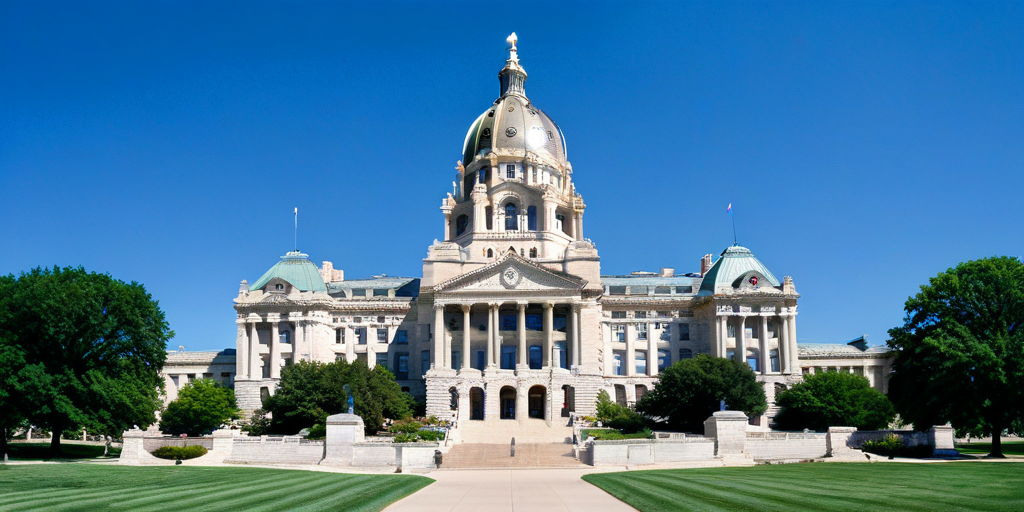
Kansas Politics Deep Dive: What Voters Want and Where the 2026 Elections Are Headed
Kansas is at a political crossroads. The 2026 elections — featuring a fiercely contested U.S. Senate race and a governor's battle between incumbent Laura Kelly and former Attorney General Kris Kobach — will determine the state's trajectory on issues from abortion to immigration to economic policy. This analysis, based on extensive research across dozens of sources including polling data, legislative records, economic indicators, and voter sentiment surveys, provides a non-partisan look at what Kansans want and how the elections are likely to unfold.
The Elections That Matter
U.S. Senate: Roger Marshall (R) vs. Adam Hamilton (D)
First-term Republican Senator Roger Marshall faces his toughest challenge yet from Adam Hamilton, the megachurch pastor with a nationwide following who won the Democratic primary with 34.9% of the vote in an 11-candidate field.
The Numbers:
- Incumbent Marshall won the Republican primary decisively: 79.8% to 20.2%
- All major race trackers (Cook, Decision Desk, Inside Elections, Sabato's Crystal Ball) rate the race "Likely Republican"
- Latest polling (co/efficient, Sept 8-10): Marshall 49%, Hamilton 44% (margin of error ±3.2%)
- Earlier polling (Global Strategy Group, Aug 12-16): Marshall 43%, Hamilton 44% — essentially a tie
Kansas hasn't elected a Democrat to the U.S. Senate since 1932. Hamilton's presence — a moderate, church-going pastor who appeals to suburban and rural voters alike — has transformed what was expected to be a routine Republican victory into one of the most-watched Senate races nationally.
Governor: Laura Kelly (D) vs. Kris Kobach (R)
Incumbent Governor Laura Kelly, who has governed Kansas for four years, faces former Attorney General and immigration hardliner Kris Kobach, who won the Republican primary with an overwhelming 73% of the vote.
- Kelly's record includes Medicaid expansion, abortion access protections, and economic development initiatives
- Kobach brings national name recognition from his immigration policy work and Supreme Court cases
- The race pits Kelly's moderate, pragmatic approach against Kobach's more conservative, policy-driven vision
What Kansas Voters Want: Issue Priorities
1. Economy and Cost of Living (Top Priority)
Kansans want lower prices, better wages, and economic opportunity. Kansas real GDP surged 6.5% in Q3 2025 — the fastest growth in the nation — but inflation and cost of living remain persistent concerns for working families. Federal tariffs and trade policy are impacting Kansas businesses, particularly agriculture.
2. Abortion Rights
Kansas voters have shown consistent support for moderate abortion access — not extreme restrictions, not unlimited access. The 72-hour waiting period law (HB 2600) passed the August primary, and voters are expected to approve it in November, consistent with the state's historically moderate stance.
3. Immigration
Kansans are divided on immigration. AG Kobach's immigration enforcement efforts have drawn national attention, while Kansas City, Kansas passed an ordinance limiting police cooperation with ICE. Rural voters tend to favor stricter enforcement; urban and suburban voters lean toward more moderate approaches.
4. Education Funding
Education is a universal priority in Kansas. Voters want to see results — better test scores, smaller class sizes, updated facilities — regardless of how the money is raised. The state has faced lawsuits over school funding adequacy, and both parties claim to support education while disagreeing on funding mechanisms.
5. Healthcare Costs
Healthcare costs are a top concern for working families. Federal Medicaid cuts are impacting Kansas hospitals and clinics, and ACA premium credits expiration raised typical Kansan premiums by more than half. Rural healthcare access is a growing concern.
6. Property Taxes
Property tax relief is popular across the political spectrum. A property tax cap amendment passed the primary and is expected to pass in November. Property taxes are a significant burden for homeowners, particularly in growing suburban areas.
Key Ballot Measures
- Amendment 1 (Property Tax Cap): Passed the August primary; strong voter support expected in November
- Amendment 2 (Supreme Court): Would change how Kansas Supreme Court justices are selected; passed the primary
- Amendment 3 (Ballot Collection): Would expand mail-in ballot collection options; narrowly passed the primary
- HB 2600 (Abortion Waiting Period): Requires 72-hour waiting period; passed the primary, expected to pass in November
Economic Indicators
Positive Signs: Strong GDP growth (6.5% in Q3 2025), low unemployment, growing tech and manufacturing sectors, strong agricultural output.
Challenges: Structural state budget deficit ($300-700M annually), federal policy impacts (Medicaid cuts, trade tariffs), housing affordability in growing metro areas, infrastructure needs.
The FY 2027 budget totals $10.74 billion, a 1.7% decrease from FY 2026. Agencies requested $450.4M more from the State General Fund, highlighting ongoing budget pressures.
Predictions and Analysis
U.S. Senate Race
Prediction: Roger Marshall (R) wins, but it's closer than expected.
Kansas is a reliably Republican state at the federal level, and Marshall has the incumbent advantage. However, Hamilton's unique profile could narrow the margin. Expected margin: 55-45% for Marshall, possibly as close as 52-48%. Key factors include turnout in Johnson County (suburban, leans Democratic) and the national political environment.
Governor's Race
Prediction: Kris Kobach (R) wins.
Kobach has strong name recognition and policy credentials, and Republican enthusiasm is high. Kelly's four years in office have given voters reasons to want change. Expected margin: 53-47% for Kobach. Key factors include Kelly's record on healthcare and abortion, and Kobach's ability to appeal to moderate voters.
Ballot Measures
- Amendment 1 (Property Tax Cap): Passes
- Amendment 2 (Supreme Court): Passes
- Amendment 3 (Ballot Collection): Passes (narrowly)
- HB 2600 (Abortion Waiting Period): Passes
What This Means for Kansas
If Republicans Win Both Races: More conservative policies on immigration, abortion, and economic regulation; potential changes to Kansas Supreme Court composition; closer alignment with national Republican agenda.
If Democrats Keep Governor's Office: Continuation of moderate policies; potential checks on Republican legislative agenda; focus on healthcare, education, and economic opportunity.
Regardless of Outcome: Kansas will continue to grapple with economic transition, immigration will remain a significant issue, healthcare costs will continue to rise, and the state's political landscape is evolving with growing diversity and changing demographics.
Conclusion
Kansas in 2026 is a state in transition. The traditional rural-urban divide is being complicated by growing suburban populations, increasing diversity, and evolving economic realities. The elections will be decided not by ideology alone, but by voters' assessment of which candidates can address their practical concerns: jobs, healthcare, education, and affordability.
The Senate race, in particular, represents a potential inflection point for Kansas politics. If Adam Hamilton can come within striking distance of Roger Marshall — or win outright — it would signal a significant shift in the state's political landscape. Even if Marshall wins, a closer-than-expected race would suggest that Kansas is becoming more competitive, particularly in suburban areas.
For voters, the message is clear: this election matters. The choices made in November will shape Kansas for years to come.
This analysis is based on research conducted September 15, 2026, including polling data, legislative records, economic indicators, and voter sentiment surveys from multiple sources. All information is subject to change as the election approaches.
Sources include: Ballotpedia, co/efficient polling, Global Strategy Group polling, Kansas Legislature, Bureau of Labor Statistics, USAFacts, Kansas Policy Institute, KCUR, Wichita Eagle, and numerous other local and national news sources.